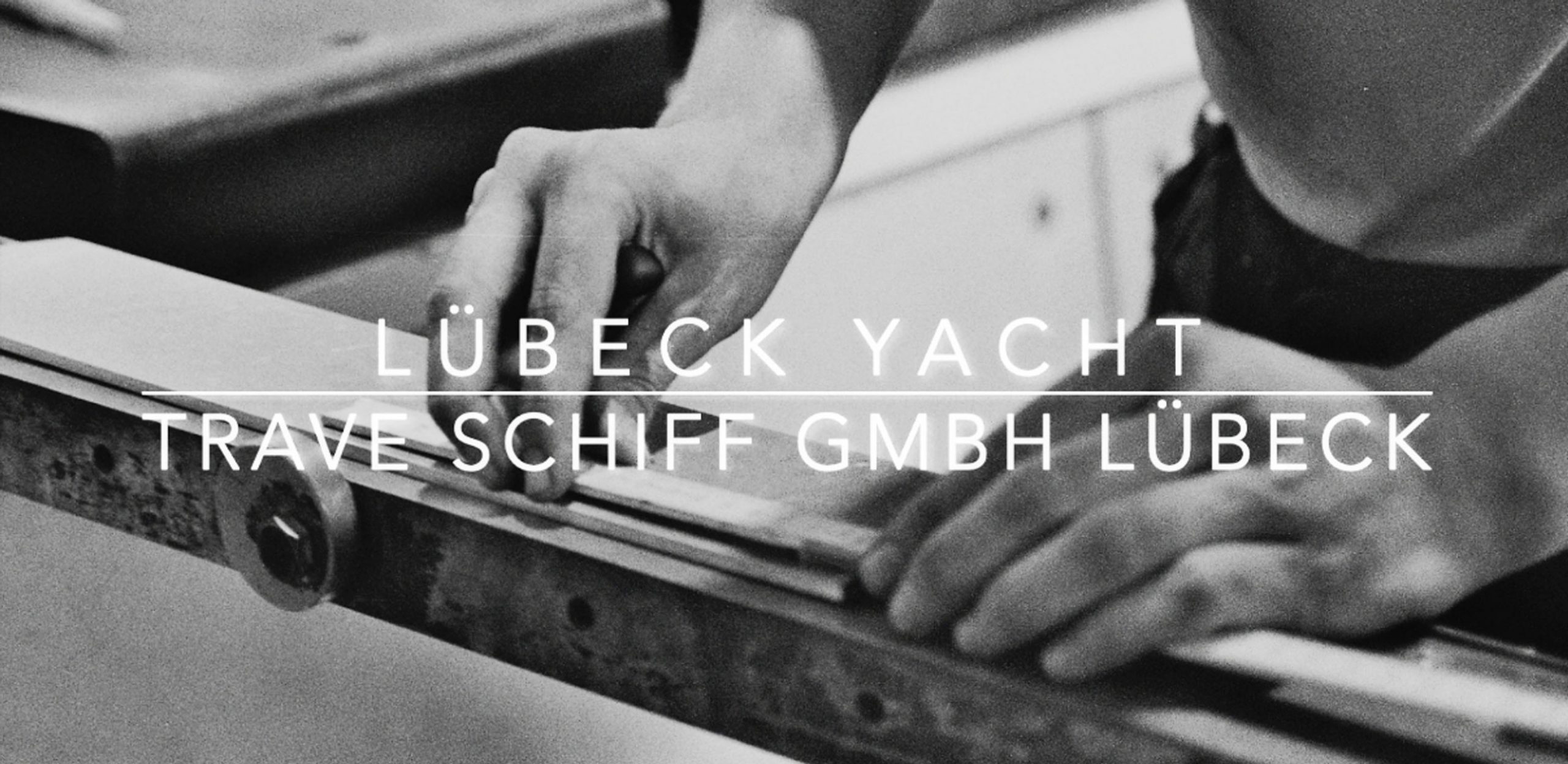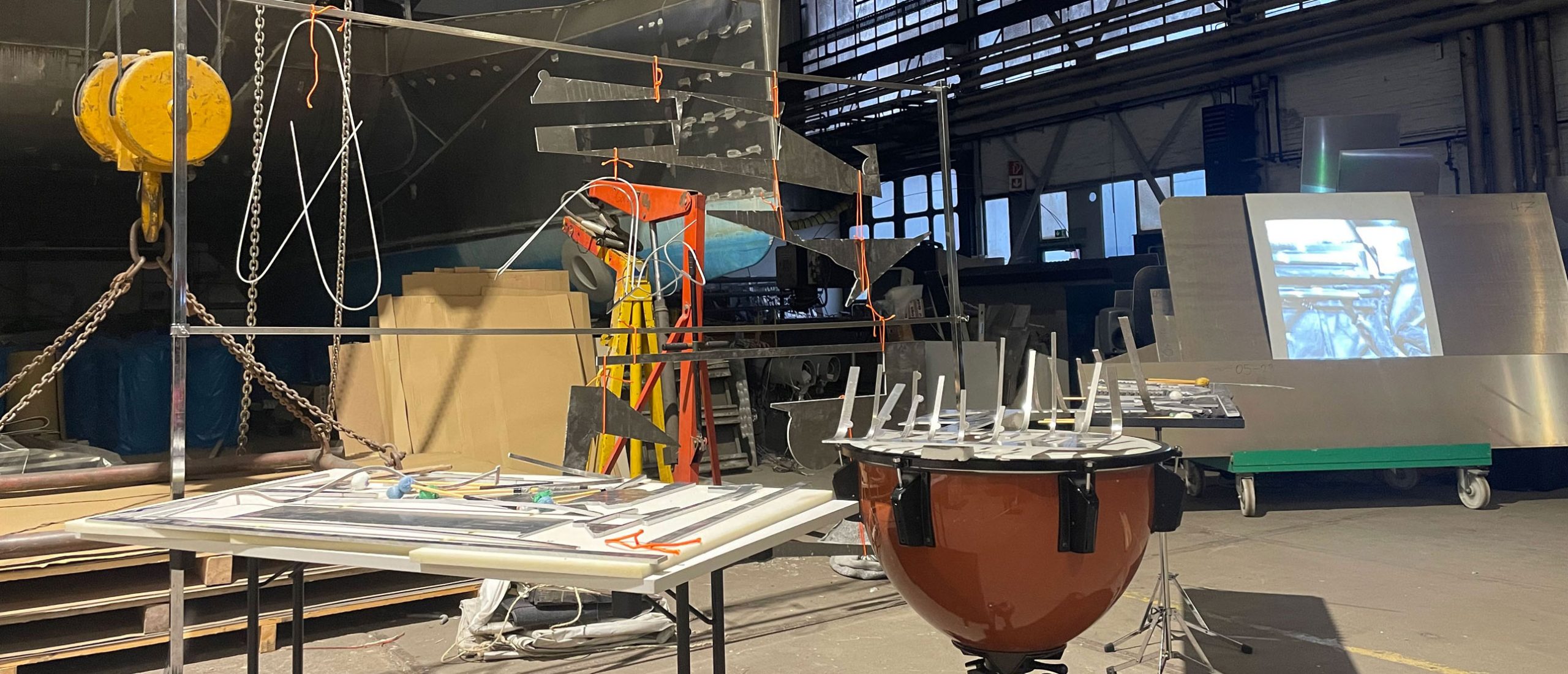
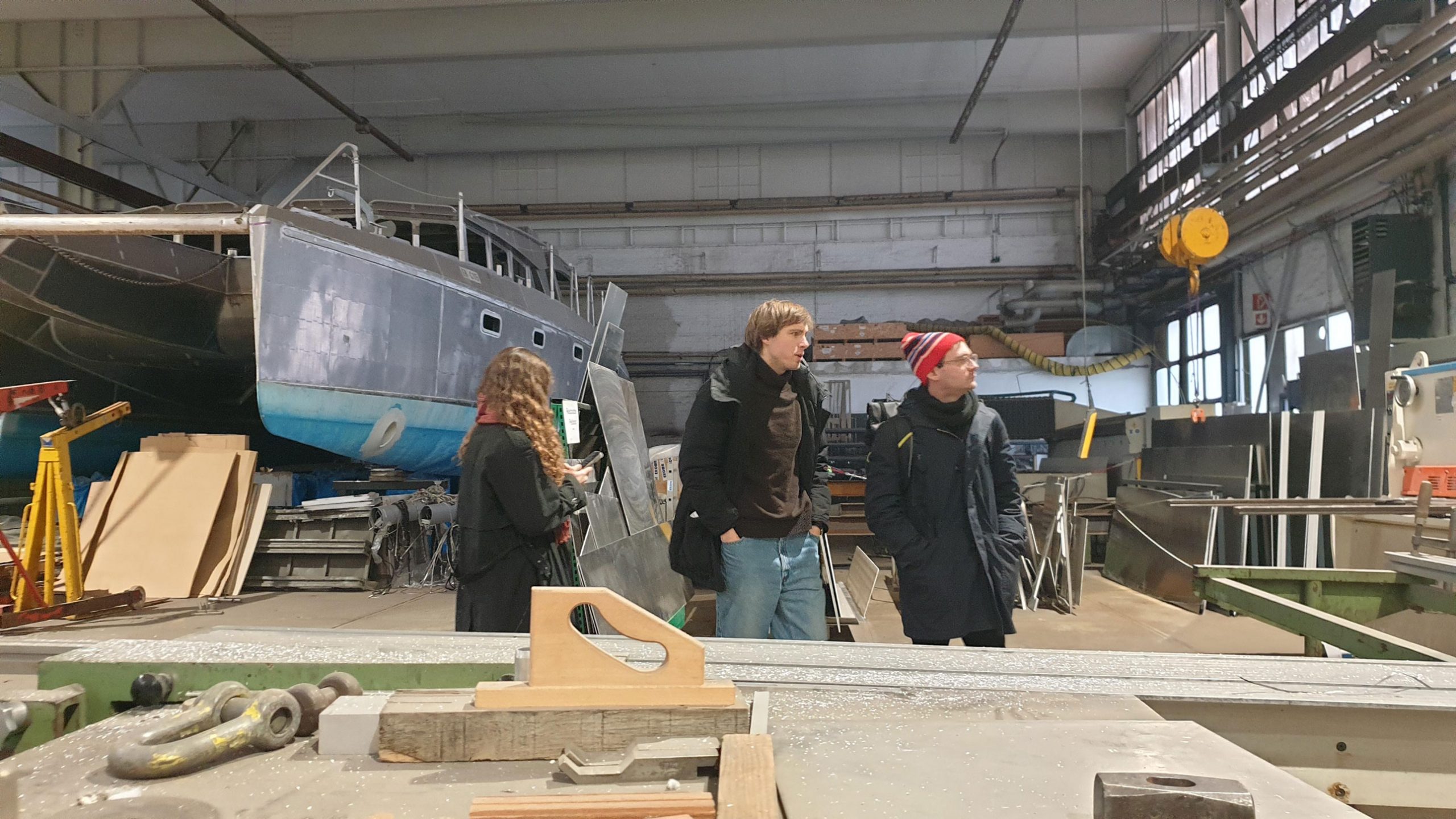
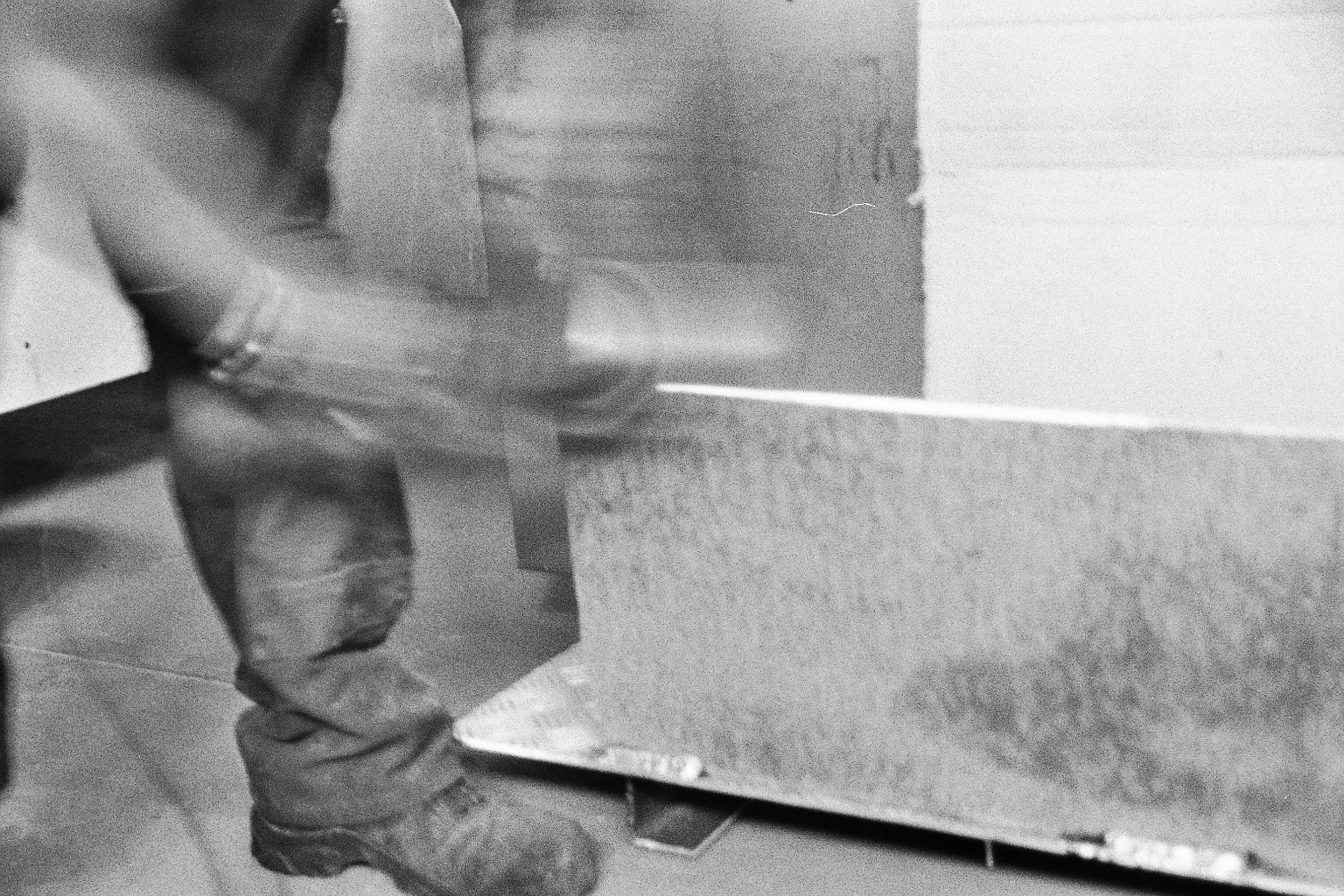
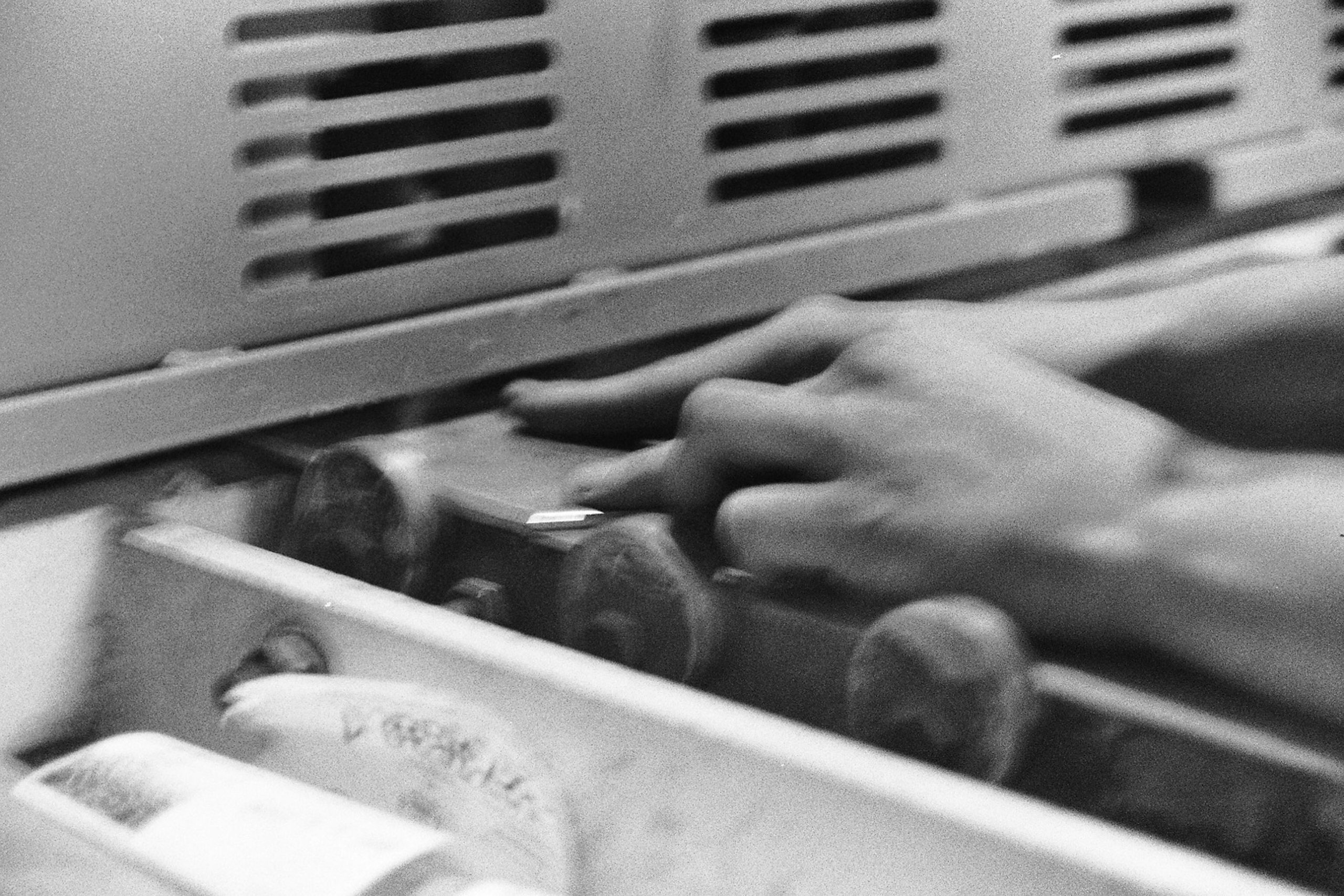
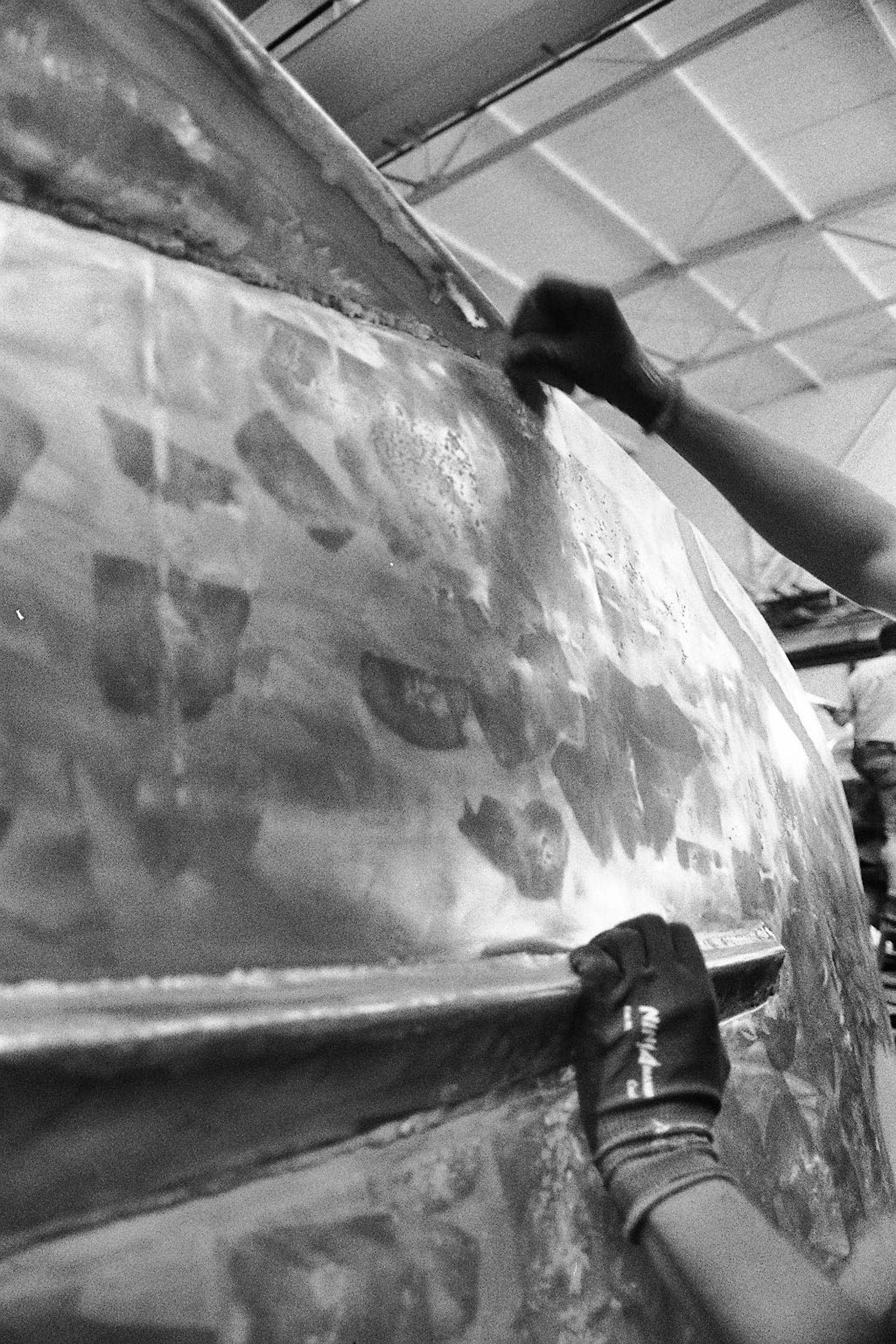
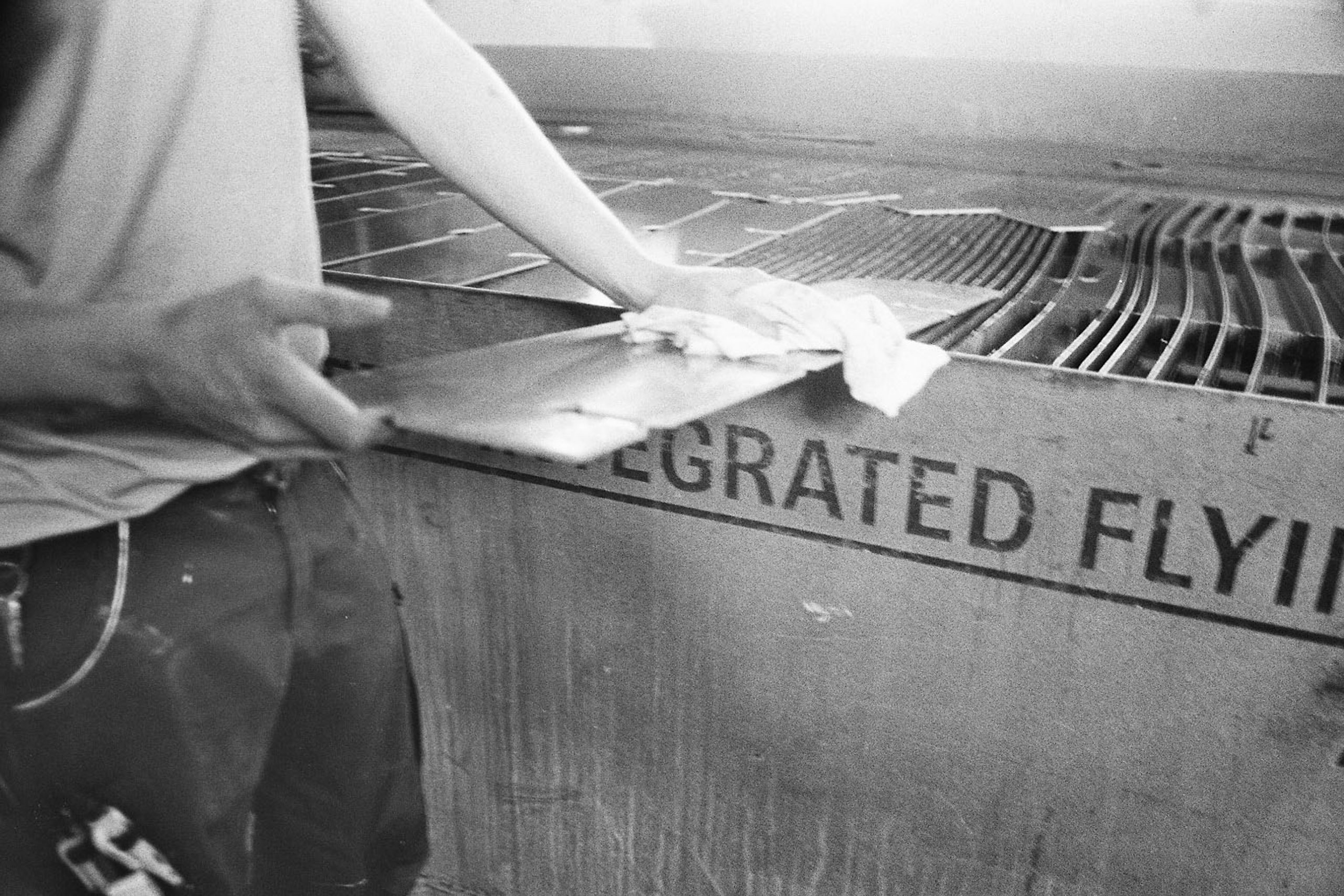
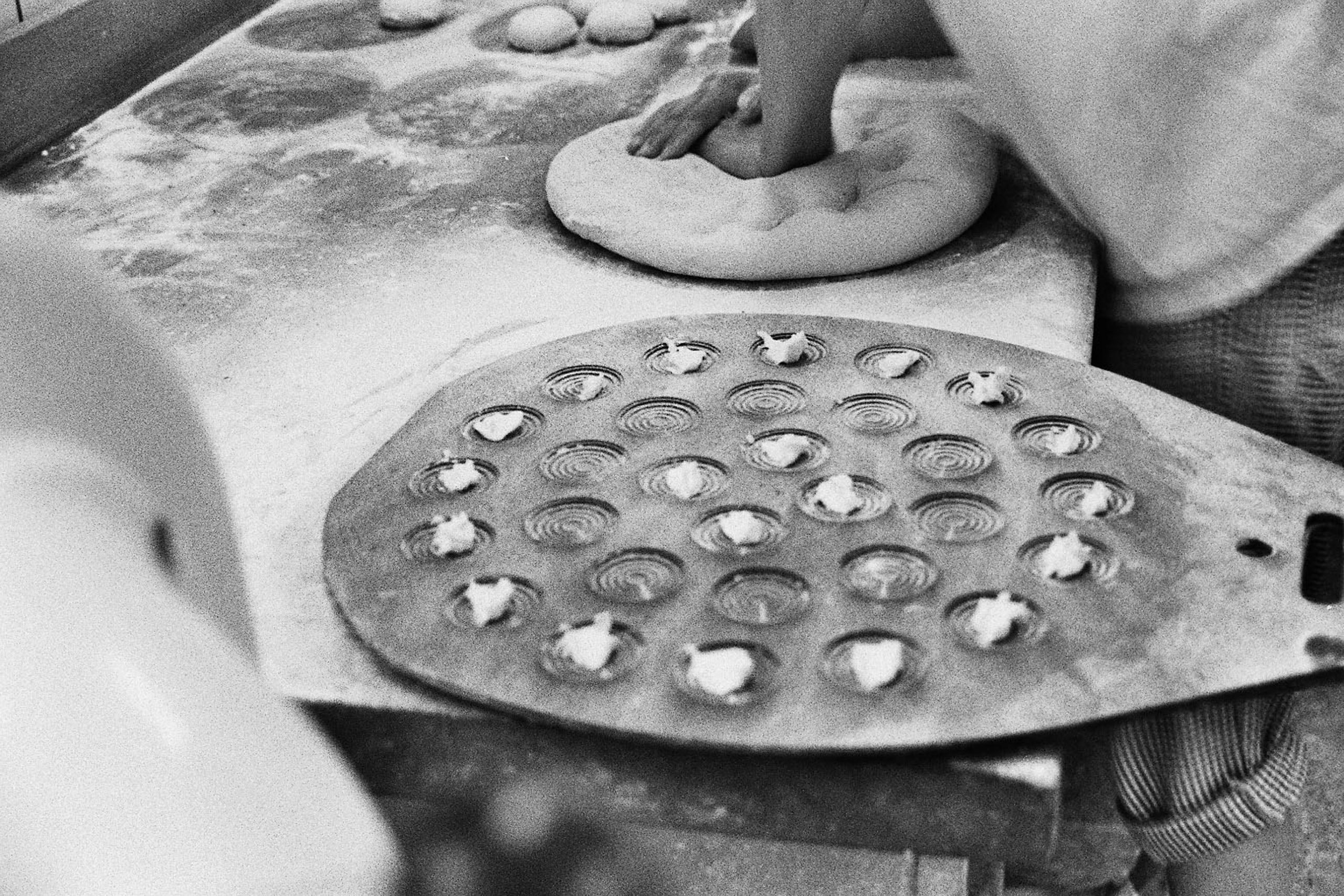
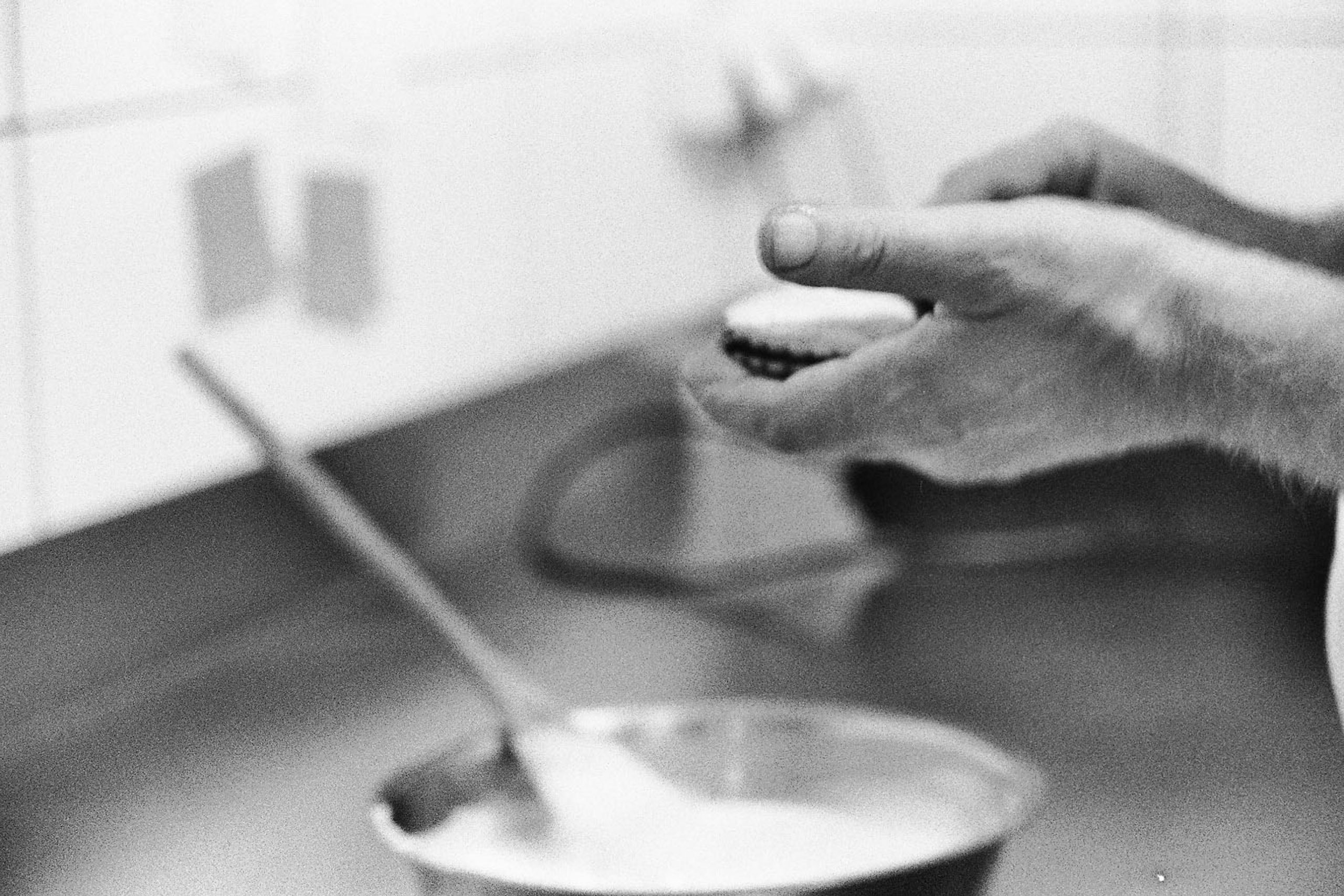
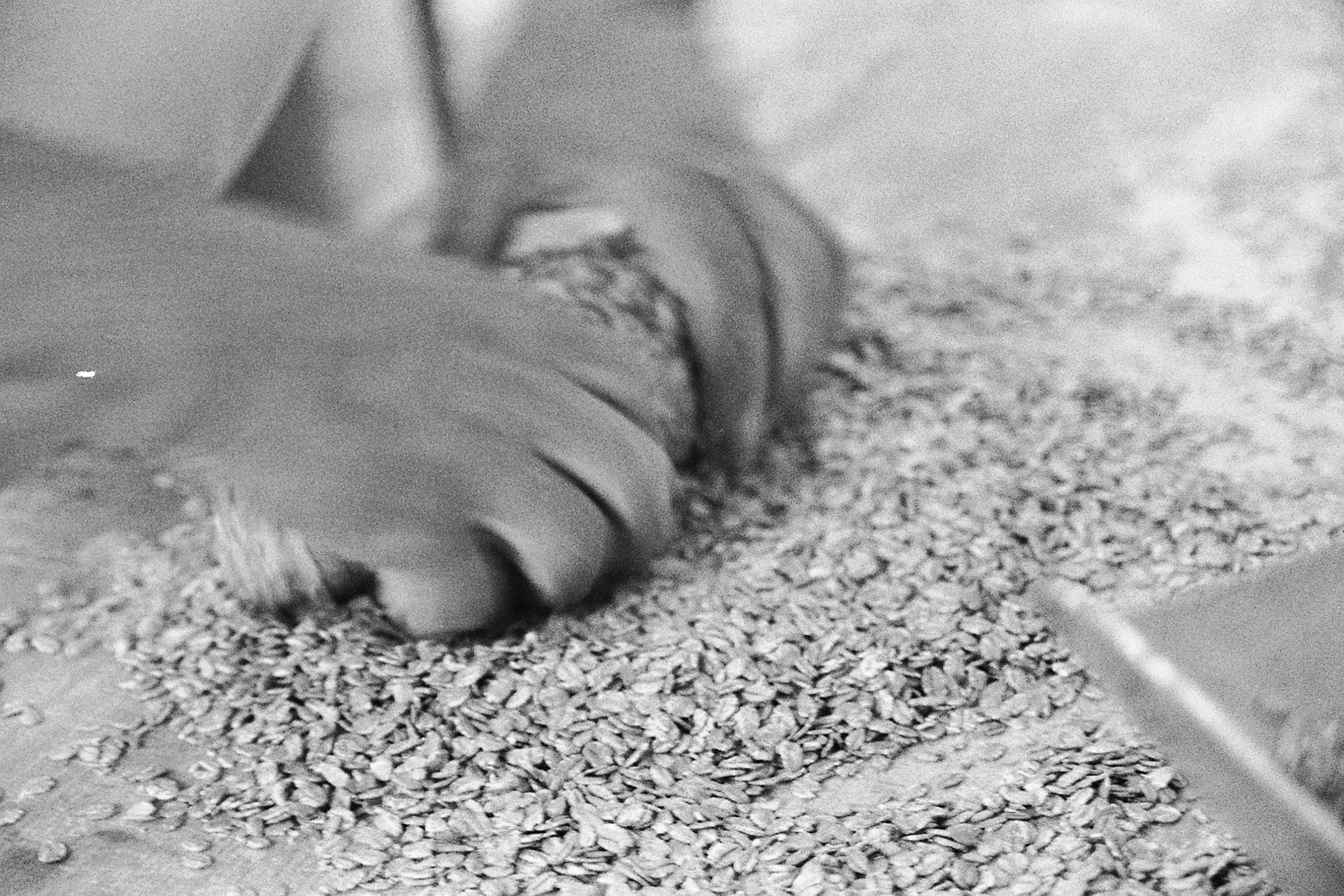
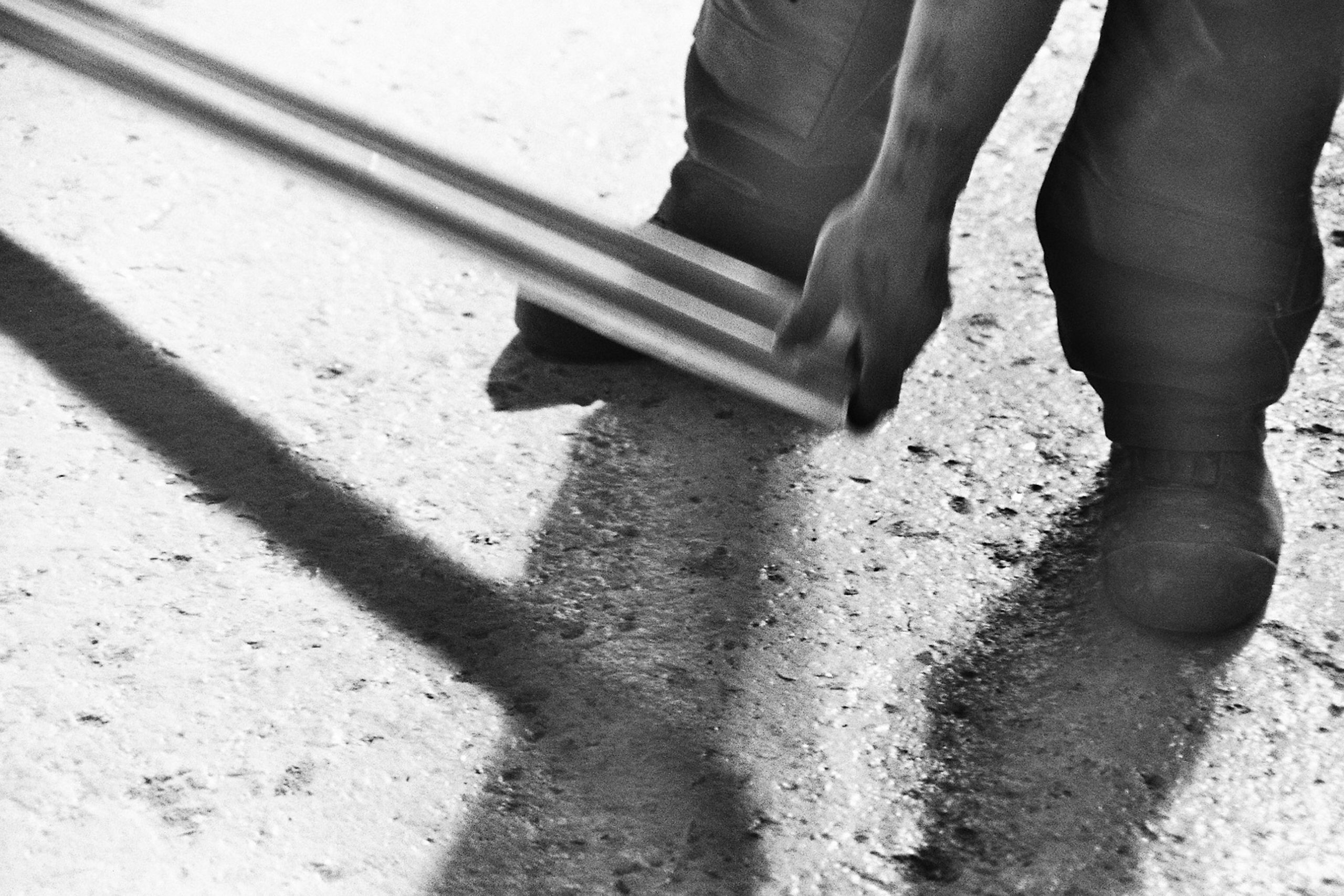
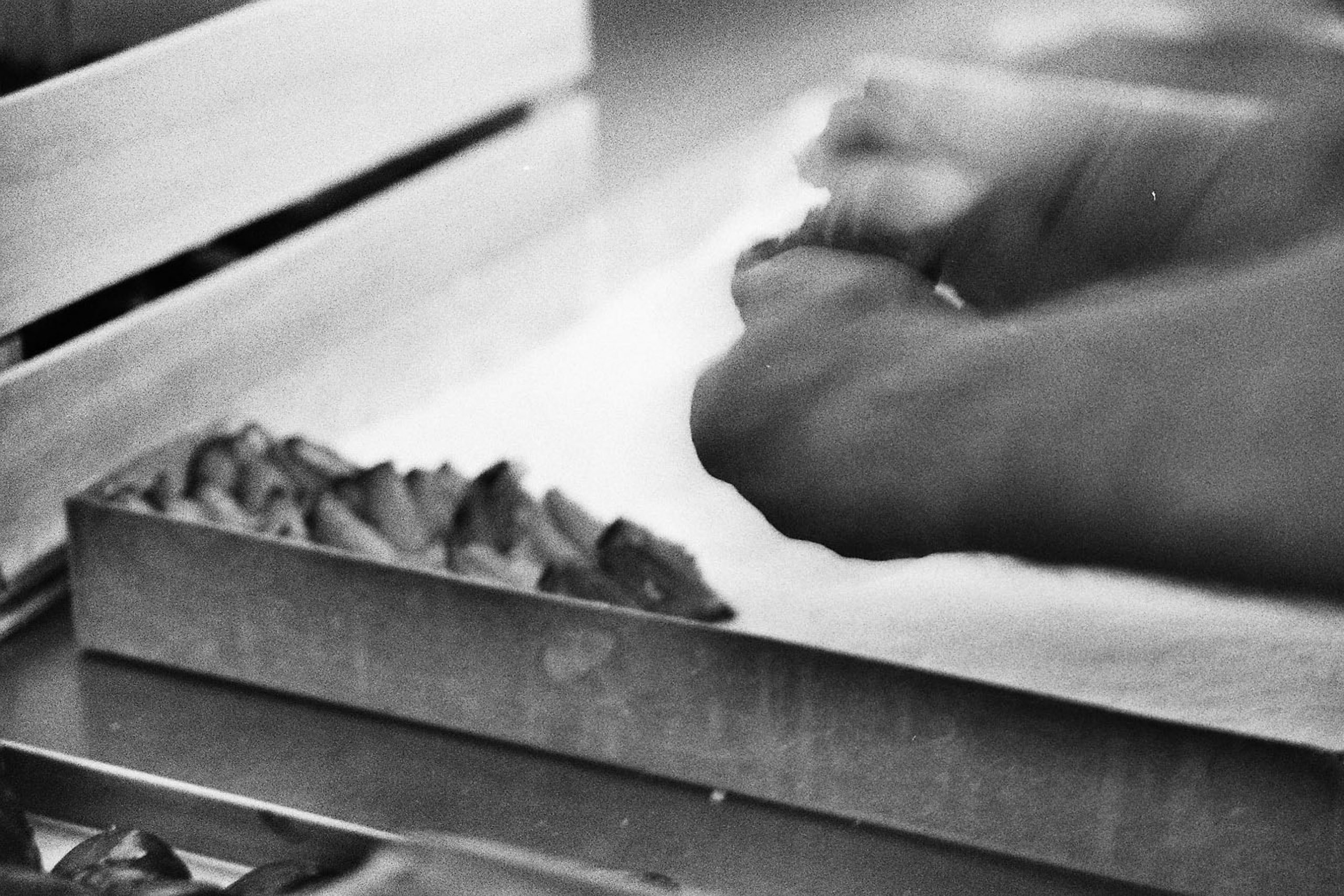
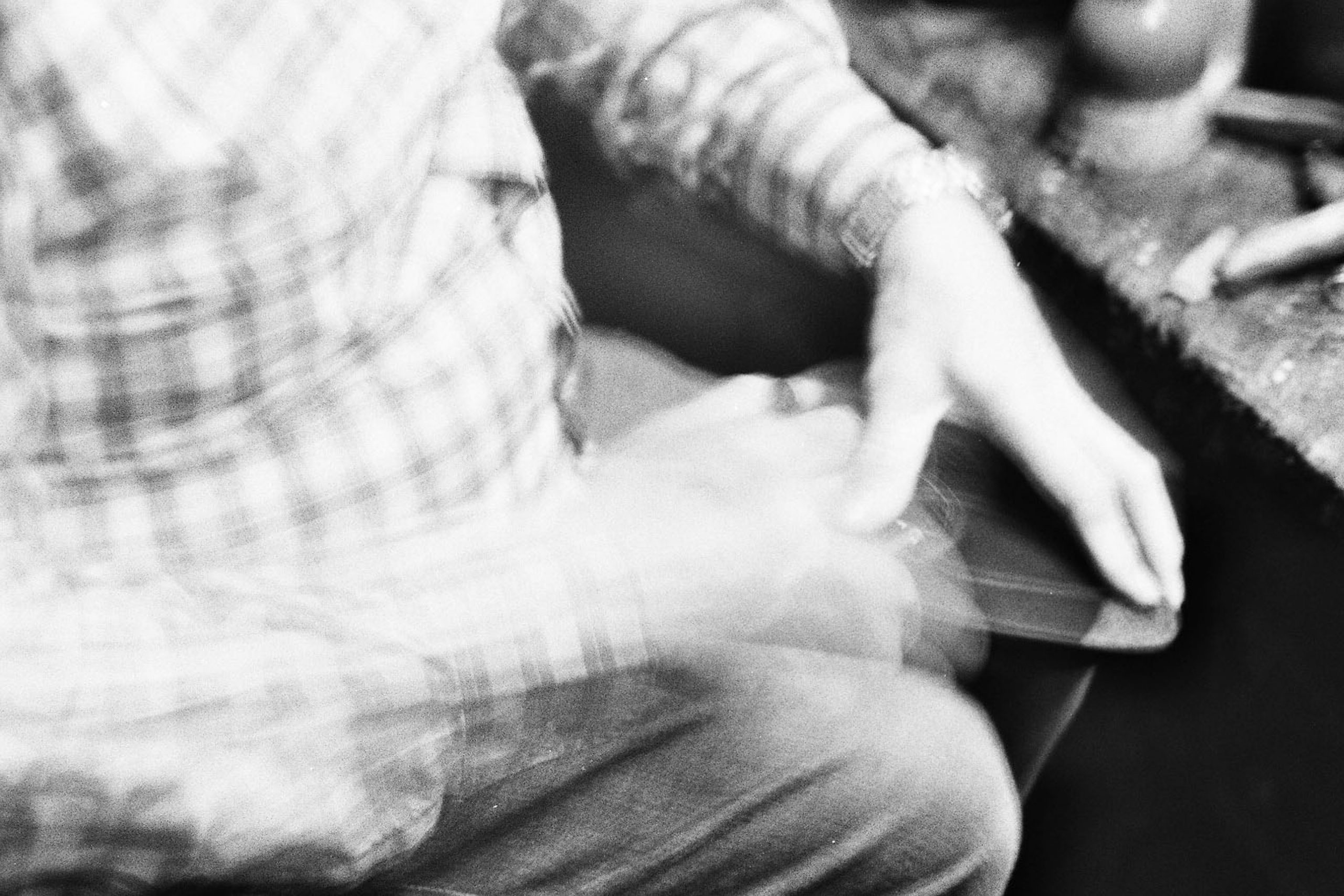
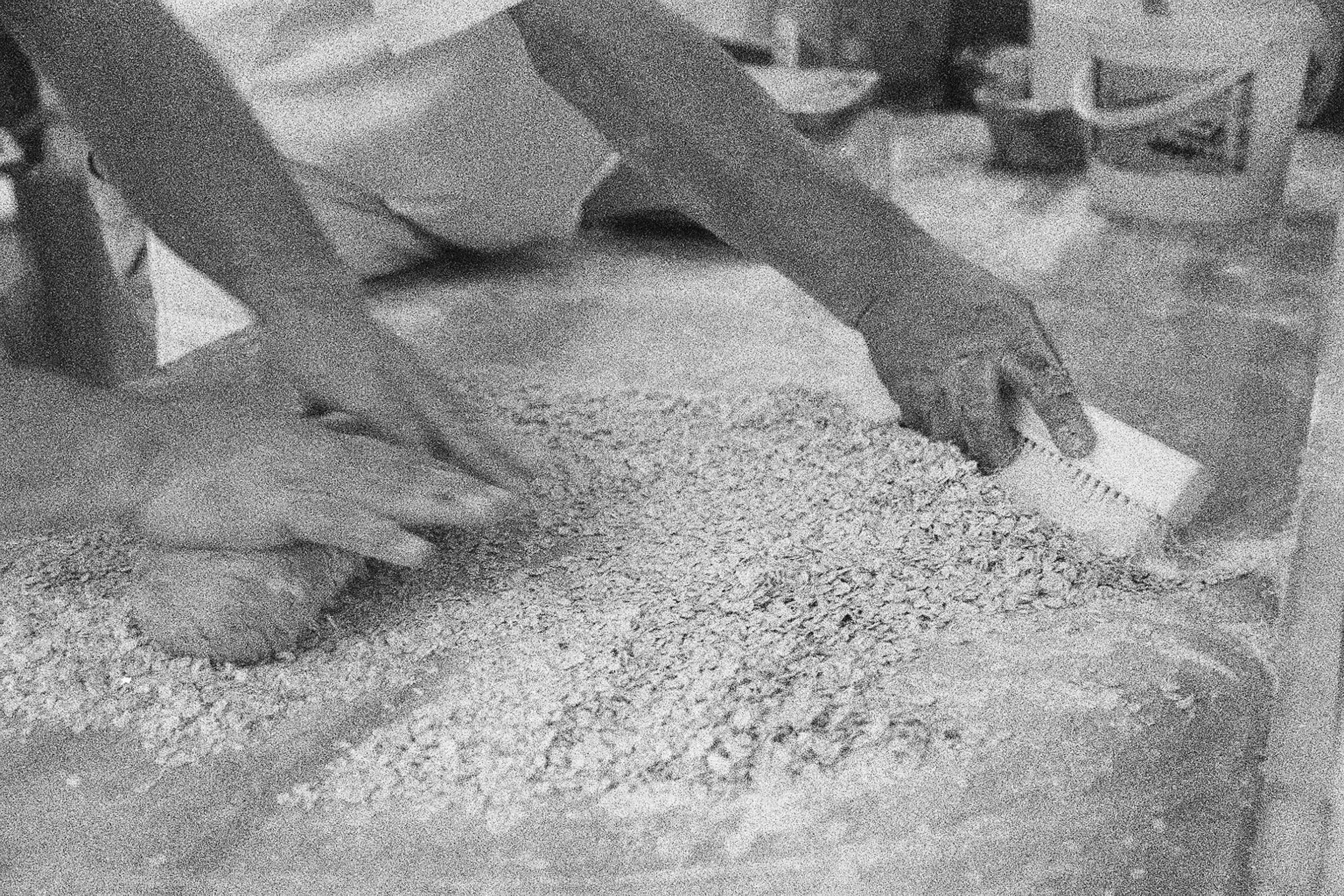
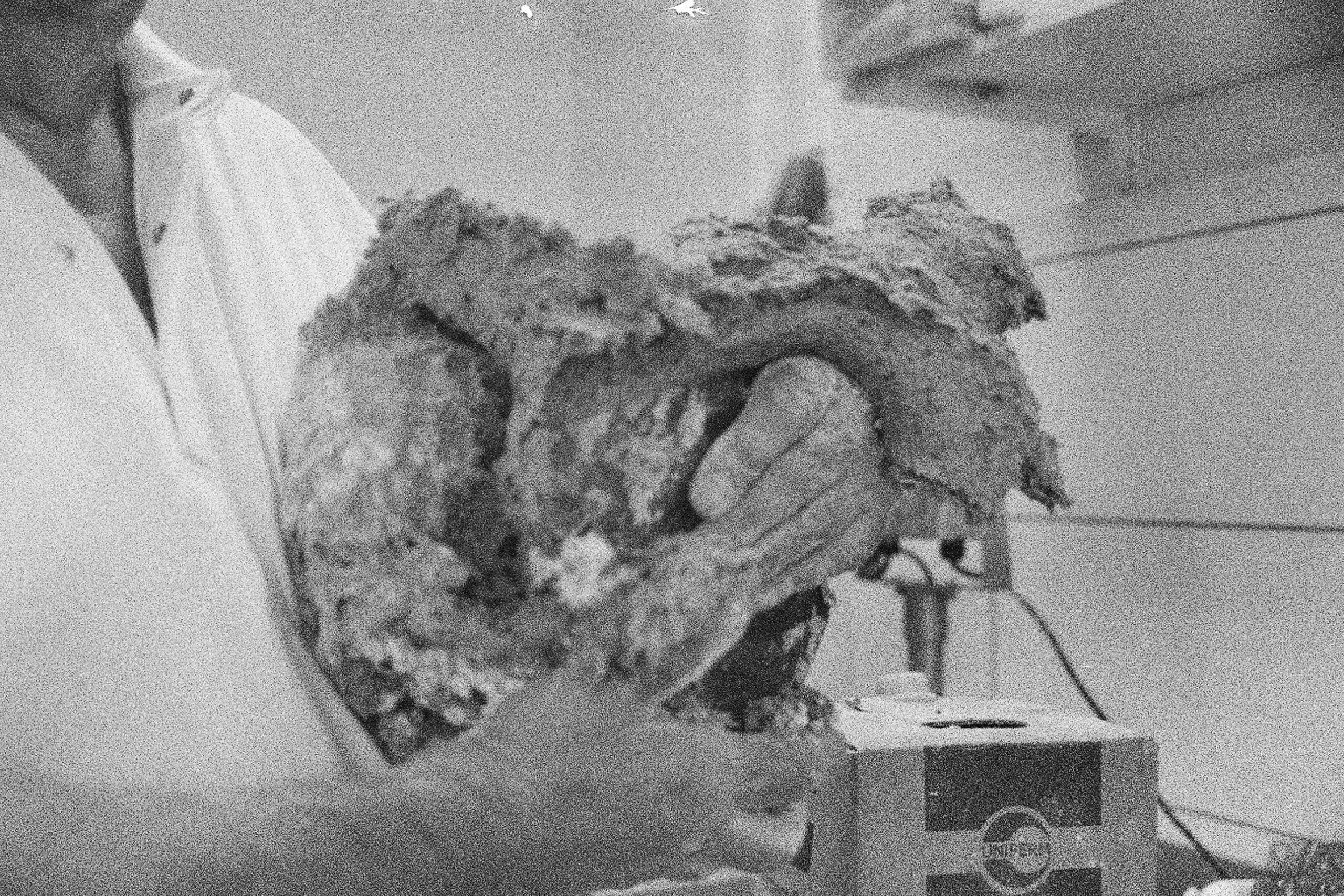
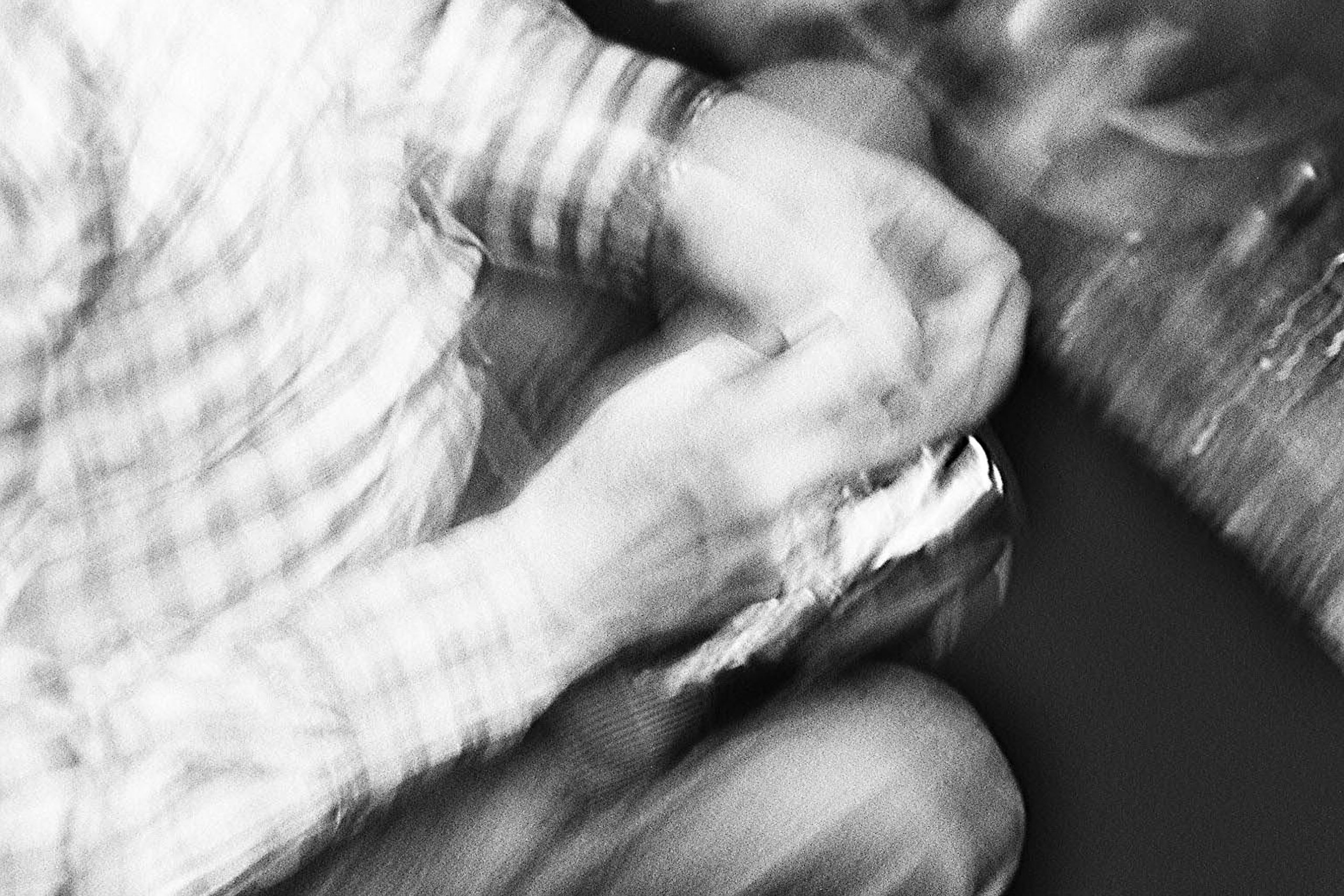
Berührungen: Gesten im Handwerk-Räume in der Musik. Wie können Berührungen – etwa der Raum der Hände in Bezug zu Gegenständen der Arbeit und des Handwerks – als Klang und als Töne erfahrbar gemacht werden? Wie lassen sich Geschichten, die durch die Berührung von Gegenständen bei der Arbeit entstehen, in ein anderes Medium wie das der Musik übersetzen? In drei Lübecker Handwerksbetrieben analog aufgenommene schwarz-weiß Fotos sowie Sound-Aufnahmen (Janine Gerber) wurden von Mariia Shmeleva, Grigorii Osipov (Percussion) und Felix Mayer (Bild-Sound-Komposition) in einer Art Konzert und Percussion-Bild-Performance im Dezember 2025 in der Lübeck Yacht Trave Schiff GmbH und vor der Bäckerei Mohr aufgeführt. I Dieses Projekt wurde vom Kulturfunke* gefördert. I Video: © Janine Gerber, 2026
Die Geburt des Gebets. Kreis.Lauf. – eine Duo-Performance mit Caglar Yigitogullari und Janine Gerber / gefördert von Kulturfunke, August 2023 I Video der Performance (Produktion/Schnitt: Holger Braack, SchwarzBuntMedia): : https://youtu.be/3Yvxb-QT0m0
zusammen.project mit Merav Shinn Ben-Alon (Tel Aviv, Israel), Kuratorin Curator: Carmit Blumensohn. Minshar for Art Gallery. Tel Aviv. Israel. 2019 I Kunstraum K70, Lübeck, 2018
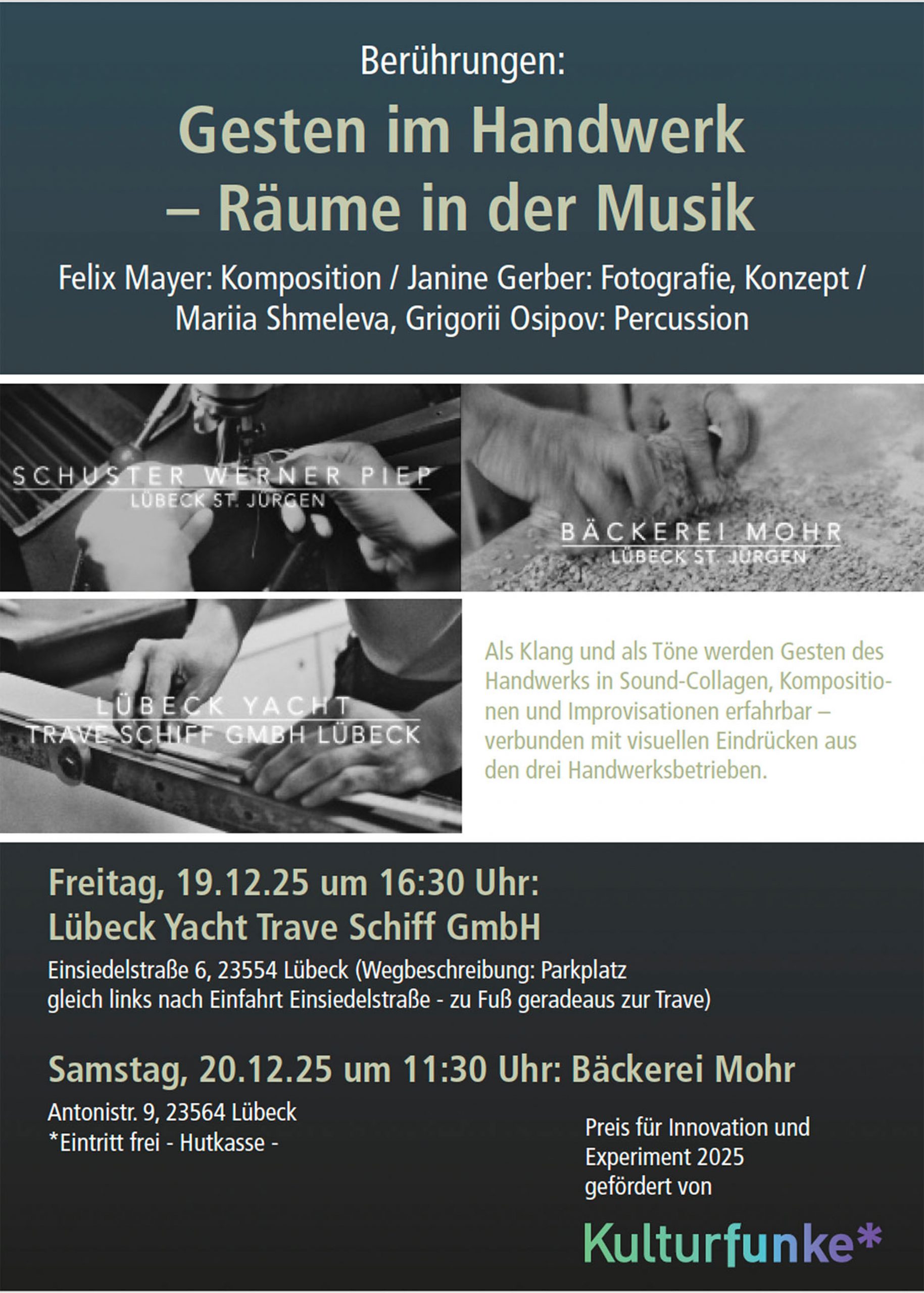
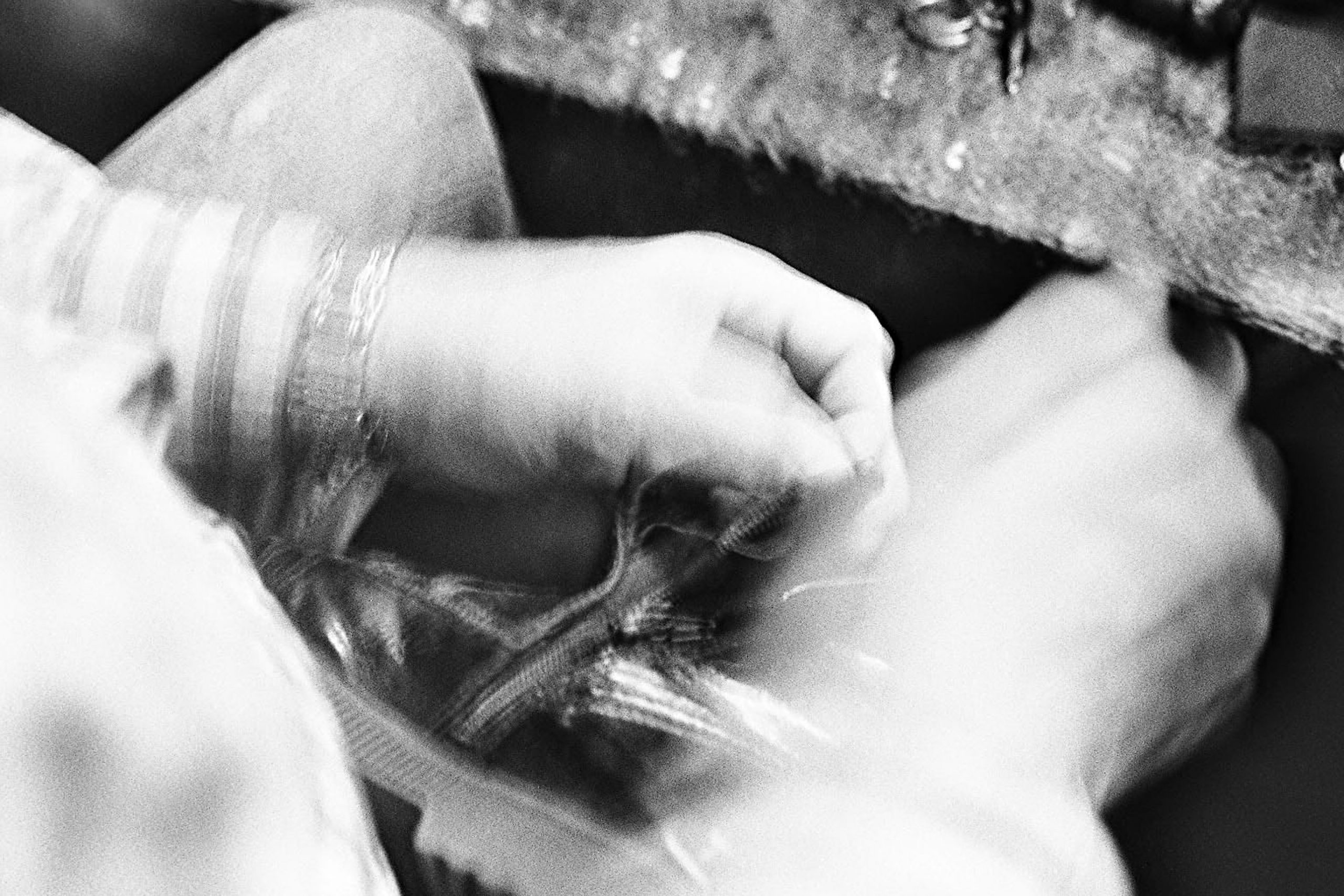


Solo-Performance Kreis.Lauf. I ca. 45 min bis 1 h I 2 Betonsäulen verbunden mit Shoji-Papier, Matte (2 x 2 m) I präsentiert 2023 im Rahmen des Kulturfunke 6 zusammen mit Caglar Yigitogullari (Die Geburt des Gebets) / Kunstraum K60 I Fund:us Theater Lübeck
Mich interessiert der Mythos Sisyphos – hier: das Bewegen der Betonsäulen, was teilweise unsinnig und ineffizient erscheint. Gerade in unserer Zeit, in der vieles gemäß seiner Effizienz gewertet wird. Mich interessiert die Anstrengung, das routinierte Bewegen des schweren Materials, das fast Eins-Werden mit dem Material durch meinen Körper, durch die Gestik und die Wiederholung. Ich frage mich, wie es ist, wenn Menschen etwas immer wieder tun, ob die Objekte dann auch so etwas wie Persönlichkeiten für sie werden, ob man sich gedanklich und seelisch damit verbindet über die Zeit und den Anspruch des Schaffens, des Machens. Ich frage mich, wie Rituale uns selbst prägen, was wir gedanklich dabei empfinden. Was hat Sisyphos gedacht, als er den Berg wieder hinabstieg zu seinem herab gerollten Stein, der da lag und auf ihn wartete? Auch bei meiner Performance gibt es die kurzen Momente des Innehaltens, des Loslassens bis hin zum erneuten Ergreifen des schweren Materials. Ich fühle, das dieses Ritual des sich im Kreis Bewegens auch etwas mit mir selbst macht, dass es mich verändert und ich die Zeit anders erlebe. Es gibt diesen Kreislauf von Geburt über das Leben bis zum Tod. Beim Bewegen des schweren Materials empfinde ich, dass ich mit jedem Schritt und mit jeder Bewegung und Geste auch meinem Tod etwas näher komme. Die Zeit arbeitet mit einem und bewegt auch uns und die Materialien. Es ist eine stetige Erneuerung, ein stetiges neu Aufmachen und Ja-Sagen zu der Arbeit, zu dem Tun, so sinnlos es auch erscheinen mag. Auch in dem Machen der Kunst ist diese Frage präsent, wer das braucht, wer danach ruft, ob es denn effizient ist, mit dem benutzten Material wieder und erneut zu scheitern – und doch immer wieder die Erfolge des Gelingens zu verspüren, die auch Zeit der Einschätzung brauchen, ob das, was entstand, dem auch standhält oder doch nicht mehr so stark und gut ist, wie man glaubte. Man macht sich wieder und wieder auf und arbeitet weiter und gerade in den schwierigen Momenten des Zweifeln und des Hinterfragens fühlt man, wenn man weitermacht, auch eine Befriedigung, die sich erst später zeigt, ein Sinn, dem man selbst der Tätigkeit des Schaffens gibt. Wenn das Papier zerreißt, könne ich aufhören. Doch da ist noch immer das Material, dass sich mit meinem Körper verbunden hat – in Liebe.
zusammen.project
Layers of a process
Zusammen.project is an ongoing collaboration between artists Merav Shinn Ben-Alon from Tel Aviv and Janine Gerber from Lübeck, Germany. The two met at an art residency in Latvia, an occasion that also offered something like a roots trip for Merav, which Janine documented. It led Merav to create work that was exhibited in Germany a year later and to meet Janine for the second time. Following a year of correspondence, Janine arrived in Tel Aviv to work in Merav’s studio. This exhibition presents the dialogue between their works.
The first part of the project was shown at the K70 Gallery in Lübeck, Germany in the joint exhibition Zusammen/Together in June 2018. The second part of the project, at Minshar Art Gallery, presents a new installation they made comprising Ben-Alon’s large drawings on canvas and Gerber’s large paper objects.
Zusammen.Project touches on central themes relating to the so-called “third generation”: the desire to move ahead without reckoning with the past, but also the need to inquire, learn and understand. The artistic acts in drawing, video and installation, which address current gender issues, is their chosen site for dialogue that touches the wound despite the pain involved.
The project, which began in 2015, is ongoing and will be shown in various places worldwide. Each stage is a new link in the process. Besides exhibitions, the artists have an Instagram account with the handle @ZUSAMMEN.PROJECT where they share works from the process.
Distance, alienation and historical traces drew the Israeli and former east German artists together, to the discovery of overlaps in their artistic practices. Gradually they dared come closer, get acquainted. Both work with paper: Merav’s lines separate the figure from its ground, Janine’s adhere to the shape of her own body, finding the right, strong lines of a drawing to cut with a cutter or to tear softly with her hands. Merav works in small formats which she enlarges according to their display space. Janine works on a large scale. Quietly and meditatively she concentrates on the paper.
While working on their exhibition at the K70 Gallery, Merav photographed Janine with stop-motion cellphone photography. The outside gaze introduces a performative aspect into Janine’s intimate cutting act. Merav strays from her characteristic, fluid drawing. She „borrows“ from Janine the concept of the paper as material and introduces it to her world where paper is not heroic, but stationary. She prints the photographs on A4 paper with a standard printer, and with a cutter “cuts out” Janine’s figure from the prints. She places the cutouts one on top of the other in a layering of varying overlaps.
Suddenly, magic occurs: Layering the cutouts frame by frame produces a 3D image that documents Janine’s performance in a way that recalls Muybridge’s iconic motion photographic series. For both artists the image is the result of performative act, a trace of a gesture. Merav disassembles and reassembles Janine’s figure like an archeologist excavating layers of a wall. Then, without notice, a new aspect appears in the works of both artists: the shadow; affirming the works’ sculptural, the thought processes they involve, the obvious and the unanticipated. The shadows are the site of the magical transference between the two artistic worlds. Janine becomes Merav’s muse. Her figure, with its different cultural DNA, becomes the subject of research in Merav’s drawings.
Awe, respect and desire compel Janine as she approaches the large sheet of paper and stands before it silently with great concentration, assessing its quality, layers, and the emotional baggage it stores. This moment pulls together all her artistic experience, sensitivities and emotions; her awareness, the currents that move her as an artist. All these will gather into the momentum of the knife cutting through the paper when she finds the starting point of her drawing. Many of the drawing precede her final cuts: she recalls her movements like carrying, holding, bending her body – movements she realized more directly thanks to the photos Merav took of her. She remembers her own embodiment during these actions lead her to create outlines of her body which she draws by cuts and tears. There is no place for hesitation, no going back. The paper itself becomes a “body.” The life she reveals in the paper comes to the surface and becomes body – a transition of embodiment.
Merav’s printed cutouts reintroduce materiality into the stop motion photographs of Janine she took with her cellphone. This low-tech practice comes with depths of feelings, sensations and contexts; the accumulation of papers has been described as “mass grave,” the traces of the cuts “remnants.” The 3D image turns the paper into a simple material again, yet it preserves the empty physical and metaphorical hole. An image of a geographic map emerges through the gaping. This is not a real map but a graphic image of a map of the world. The seemingly historically significant reference is revealed as internal chaos.
For Janine, the act of cutting means the act of drawing. For Merav it is a moment of transition, a preparation stage which she photographs and prints a new creating an image that holds traces of the complex act. Potential human violence, specifically related to gender, has appeared in Merav’s early works and over the years (her well-known works of cuts and wounds). Like Janine, she also attempts to open screens in her works. The engagement with the presence of the past in the present is to be found in all Merav’s works from recent years. Such were her gendered readings of the works of female artists in the 1970s in her 2015 exhibition at Ha’Kibbutz Art Gallery and Basis Gallery a year later. In 2018, she dug into the walls at Ha’Kibbutz Art Gallery to expose the archive of its exhibition history. The collaboration with Janine introduces a new dimension into the dialogue with the past. This is a live intercourse that deals with the present the past is a part of, therefore one that affords room for movement, response and change.
Both treat the line as the backbone of their works: as both medium and work material. Both relate to the conflict and seek to bring it forth. The intersection between them crosses personal identities to become universal.
Carmit Blumensohn, December 2018